
I love parenting books. Maybe a little too much. When I first became a mom it took me a good six months to realize the key to my success wasn’t hiding in the next best-seller, that the term success doesn’t really apply to parenting at all. In my experience motherhood is praying, trying things, failing miserably, crying, praying some more, trying something else, failing again, and then suddenly realizing my child is no longer struggling with that particular issue. Hallelujah! Was it that new method? Time? A combination? The plain, sweet mercy of God? You just never know.
Regardless, I still love parenting books. One of my recent favorites is not technically a parenting book, but it’s shaped my perspective as mom anyway. Quiet: The Power of Introverts in a World that Can’t Stop Talking by Susan Cain is a message to our fame-focused, popularity-obsessed culture that introverts are just as valuable and necessary to the world as extroverts (think of all we’d be missing without Rosa Parks, Warren Buffet, and Albert Einstein!). She also shows the upside of being introverted, a rare and wonderful message for those of us who sometimes feel weird for choosing time alone over a party. But she has something to say about children too.
At one point Cain refers to a study done by developmental psychologist Jerome Kagan. He and his team looked at five hundred four-month-olds, exposing them to “a carefully chosen set of new experiences. The infants heard tape-recorded voices and balloons popping, saw colorful mobiles dance before their eyes, and inhaled the scent of alcohol on cotton swabs.” According to Kagan, about 20 percent cried loudly and waived their arms and legs. He called these babies “high-reactive.” About 40 percent reacted very calmly. Kagan called them “low-reactive.” The rest of the babies landed somewhere in between these two groups. When the kids returned for more testing at age four, seven and eleven, Kagan found that most of the high-reactive babies became thoughtful, sensitive introverts while the low-reactive babies became relaxed, highly social extroverts.
When I first read about high-reactive babies, I thought of our sweet baby Autumn. Any loud noise makes her jump in my arms. New faces that come too close make her lower lip turn down. And even though I only put her in the church nursery during the sermon, she’s usually crying when I come back to get her.
Cain says introverts are especially influenced by the way they’re raised. Our culture is constantly telling them to speak up more! Be more ambitious! More outgoing! And they’re subtly sent the message that their God-given personality is inadequate. But when introverts have an understanding family—parents who accept them and give them the time and space to be alone where they can dream and think—they thrive.
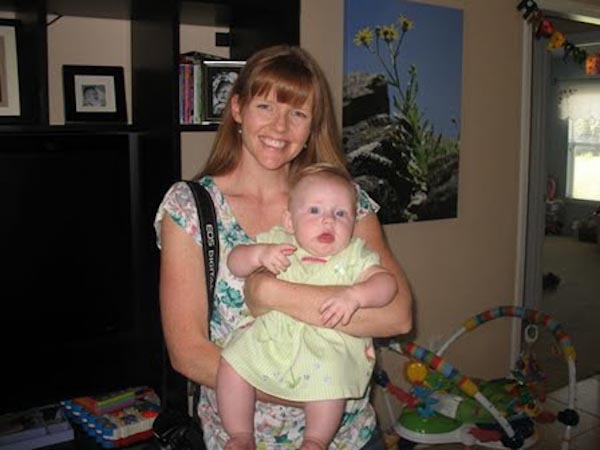 Only time will tell if Autumn’s an introvert. We are still getting to know her, watching her personality appear one little bit at a time. She’ll grow and change a lot over the years. But certain parts of her identity have been placed there by God since before her birth. And I want to accept who she is at every stage, even now as a baby. It’s so easy to slap the “fussy” label onto an infant. But what if instead I study her more carefully, and notice that she just needs more time to adjust to new people and situations? I then become more patient when she’s up a lot at night. I’m aware that she’s still learning how to sleep in her crib without the sound of my heartbeat in her ear. And I’m less frustrated when she cries in the arms of an unfamiliar person when I think of her sensitivity as a God-given trait that might one day make her an especially compassionate friend.
I love reading and I’ve learned a lot from books. But I want to study my children more, to know my little flock, and with God’s help, train them up the way they should go.
5 comments for “Introverts: Fearfully and Wonderfully Made”